is for

Monkeying Around the House
Today's letter assignment in Mrs. Matlock's Alphabe-Thursday Class is the Letter M. So the monkeys here at HFTS have been doing some monkeying around this week for Tablescape Thursday, Vintage Thingie Thursday, and Foodie Friday.

Those silly monkeys reached into the "vintage" section of the recipe folder and pulled out a recipe I haven't made in over 30 years.

I was a child of the 50s and 60s, and it seems monkey bread was a phenomena born during those decades. There's not much documentation that I could find on the history of monkey bread, but I do have fond memories of summers during those years when my cousin, Ilene, would come to town to visit for weeks at a time. She was my only cousin who was exactly my age, and we were the best of friends. Like most young girls we spent a lot of time at the swimming pool or just hung out with friends. Nights we would have sleepovers either at my home or at the home of Ilene's grandparents. If we were at her grandparents (my aunt and uncle), we would often wake to the aroma of fresh baked bread . . . monkey bread.

Monkey bread is made from sweet yeast dough that is formed into balls or odd shaped pieces, dipped into melted butter, and then layered in a tube pan for baking. For a sweeter version, many would dip the pieces of dough into melted butter and then a mixture of sugar and cinnamon. A savory version would be dipped into the butter and then parmesan cheese.

Also known as bubble bread or pull-apart bread, monkey bread is basically yeast rolls that combine during baking. The name may come from the fact that the connected rolls resemble the branches of a monkey puzzle tree. But I like to think the name comes from the fun of gleefully pulling apart the loaf right at the table. Kids find it to be great fun!

Recipes for this type of bread were found in women's magazines and cookbooks of the 1950s, so I used a vintage pan that would likely have been in a kitchen during that era. This tube pan has a patent date of December 18, 1923, and most likely was an advertising give away for Swan's Down Cake Flour.

Come on in and have
a seat on the chaise.

We've a fresh
brewed pot of coffee.
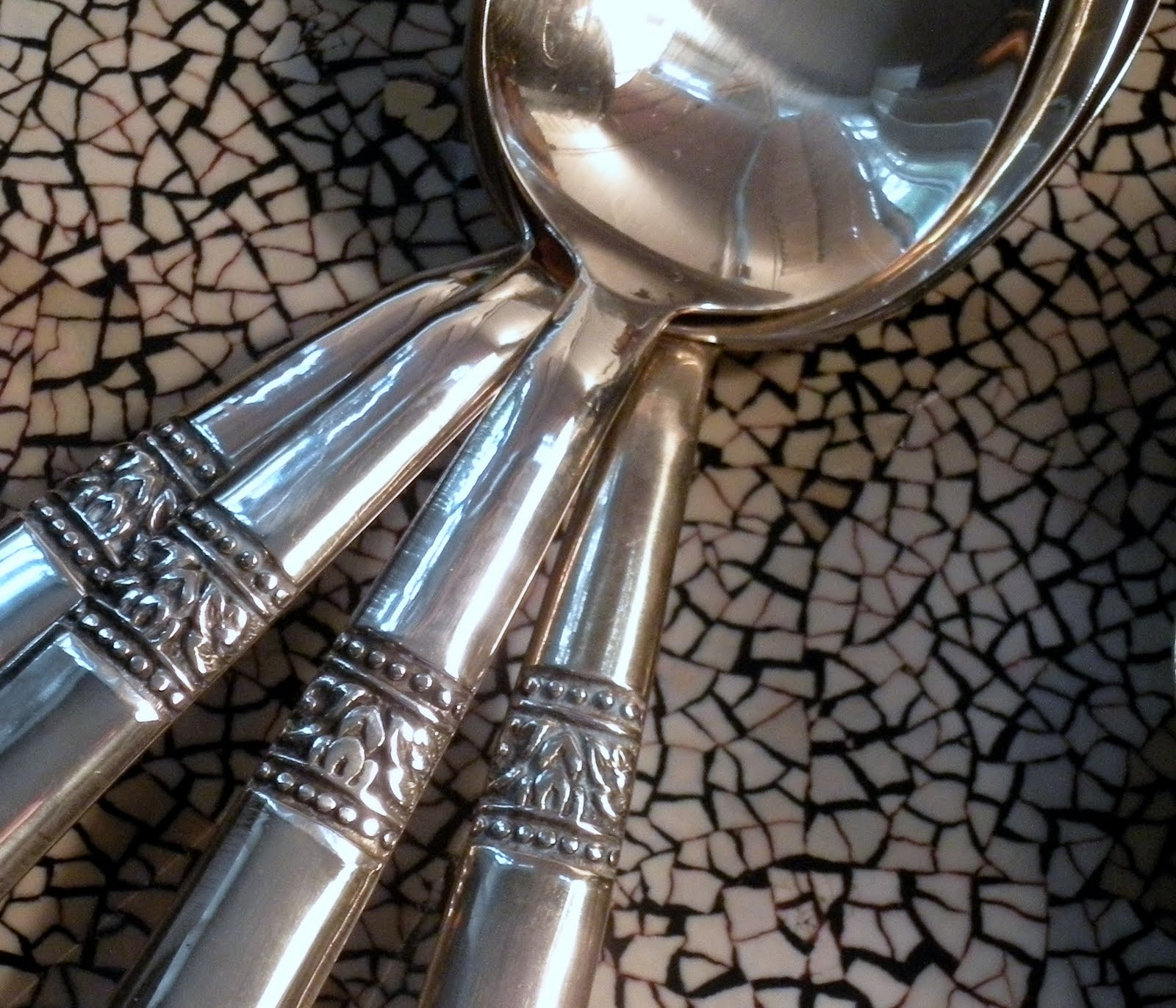
I'm using the set of Macassar spoons from Singapore that were a gift from Mary @ Across the Pond. You can now find Mary at her new blog, A Breath of Fresh Air.

Coffee mugs are by
American Atelier in the Monkey pattern.

The monkey cachepot
is by Kaldun and Bogle.

The small plates are
Limoges by Philippe Deshoulieres.

The service plate holding the bread is English Floral by Spode. I like the woven motif on the rim that matches that of the cups.

So go ahead and
pull off a piece for yourself.

Can you smell the aroma of fresh baked yeast bread? It's right out of the oven. I didn't make mine with cinnamon and sugar, so have a little orange marmalade to sweeten it a bit more.

Oh no, what's this?
It looks like the monkeys
have started the party without us.

I told you there was a lot of
monkeying around going on here at HFTS!

Those rascals have
tossed the cups about . . .
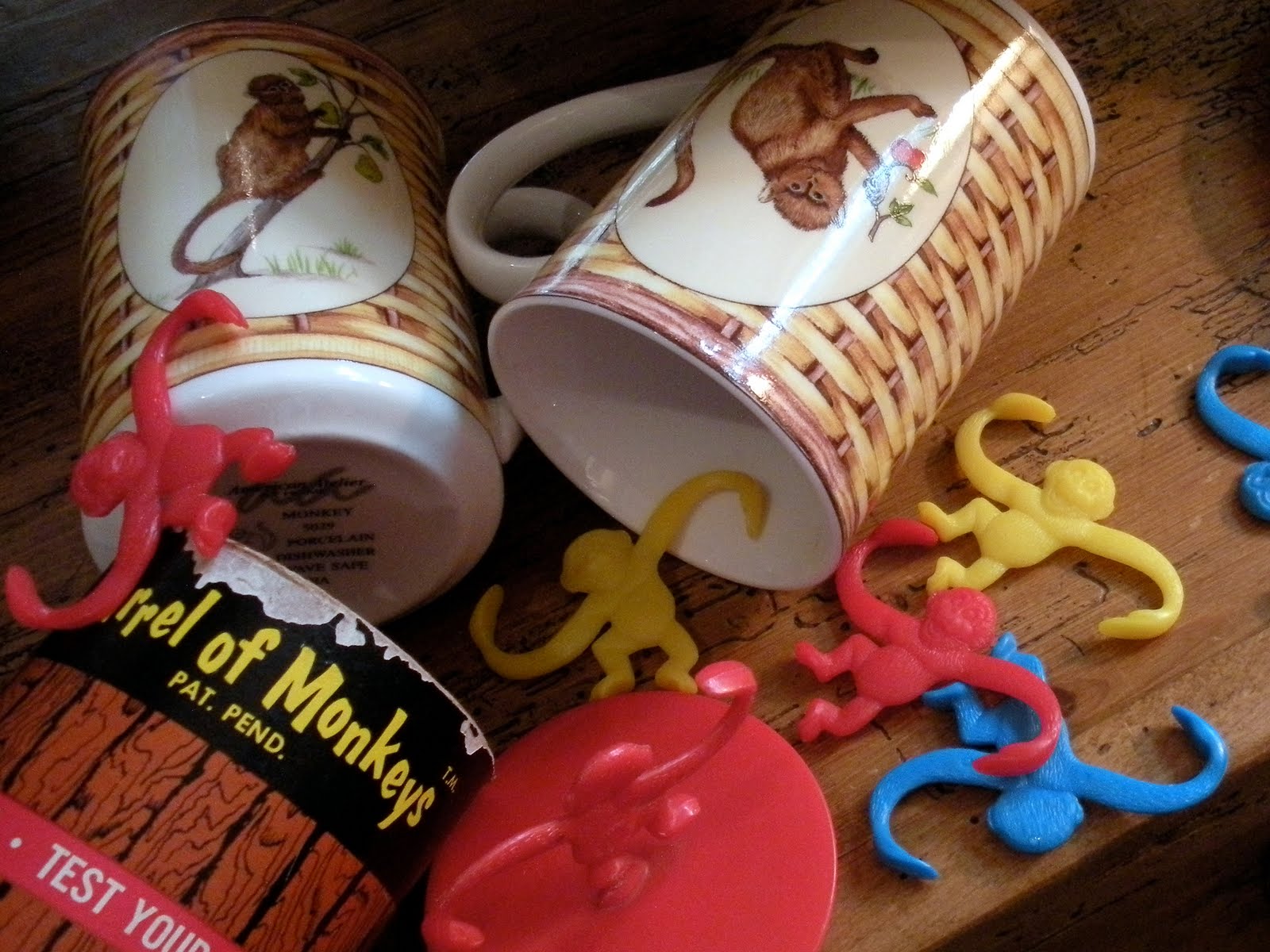
and knocked over the
Barrel Full of Monkeys.

If any of you remember this
game of skill from the late 60s,
you probably know it isn't easy to win.

Looks like Izzy has
even popped in for the party.

And this guy is forever climbing
about the house causing all kinds of mischief.

He's pulled himself
right up to the top.

You ask about this friendly monkey with his parrots?
He's the latest needlepoint project I've recently completed.

His banjo playing friend is patiently waiting
for me to stop monkeying around and to get stitching!

Oh, I almost forgot.
These guys want you to have this recipe so you
can have some Monkeying Around at your house.
Monkey Bread
Mix 1 cake of yeast into 1 cup of warm milk (120-130 degrees) with 1/3 cup sugar. Add 4 tablespoons of butter, 1 and 1/4 teaspoons of salt, and 2 well beaten eggs. Mix well and then work in 3 and 1/2 cups flour. Cover and let rest until the dough doubles in size. Then knead and roll out into 1 and 1/2 to 2 inch balls. Dip dough ball into melted butter (and sugar & cinnamon mixture or parmesan cheese) and layer into greased pan. Cover and let rise till double again. Bake at 350 degrees for 30 minutes.

Hope you've had a little "monkey fun" today.
I leave you with the three wise monkeys and the proverbial
principle "Hear no evil, see no evil, speak no evil."
Now quit monkeying around and get yourself over to the marvelous blogs listed below.
www.foodtimeline.org used as a reference.