Showing posts with label International Folk Art Market. Show all posts

Wednesday, September 1, 2010

Mysterious, Exotic Indigo


Indigo

Indigofera tinctoria is the plant that was once one of the original sources of indigo dye. It is a small shrub with light green leaves and sheafs of delicate pink flowers. This past spring I planted two different varieties of indigo in our garden. I like to use the graceful sheafs of blooms to use as filler in cut flower arrangements.


Indigo, the color of a midnight sky,
the tint of my favorite pair of jeans,
and the dye used to create these exotic fabrics.
Indigo appears in the rainbow between
blue and violet and shares attributes of both.


Hand Dyed Indigo Fabrics

Indigo, a color both rich and mysterious, has traveled through time in many cultures being used as pigment for painting, as dye for cloth, and for both medicinal and cosmetic purposes. A natural dye originally extracted from plants, indigo dye is among the oldest dyes used for both textile dying and painting. Most indigo dye today is usually a synthetic, but these fabrics were dyed using traditional methods of the Yoruba culture of Western Africa.


Gasali Adeyemo

Gasali Adeyemo, one of the international artists at the Santa Fe International Folk Art Market, is a master at his craft of indigo batik dying. Born and raised in a rural village in Nigeria, Adeyemo spent six years to perfect his artistic skills at the Nike Center for Arts and Culture, Nigeria. After his student years, he became a trainer to teach others the arts of the Yoruba people: batik painting on fabric, indigo dyeing, embroidery, applique, and quilt making.


My husband and I had the good fortune to meet Gasali at the 2009 IFAM where he exhibited his craft and sold the rich textiles that he had created. The yards of exotic indigo Batik were done using traditional Adire techniques of tie-dyed fabric with traditional natural indigo dyes.


Totally fascinated, my husband and I listened as Gasali explained this time intensive method. Using raffia, he stitched row upon row of repeatedly folded fabric to create the white pattern on the indigo background.
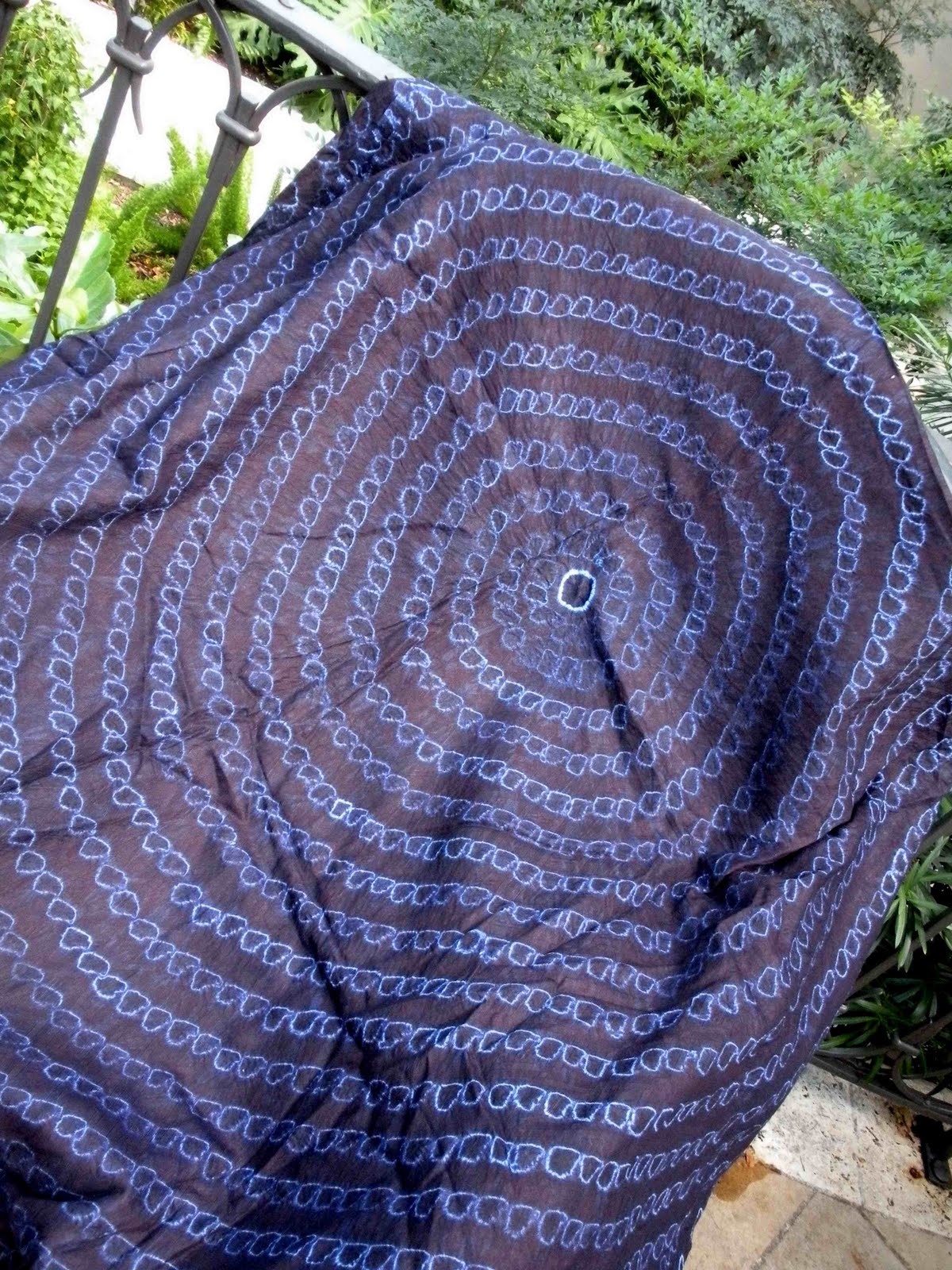


Once dyed and opened a design of concentric rows of pebble shapes encircle this fabric.


More of the same type of design but a little different color effect.


Other designs are created using paraffin or beeswax to lay out a pattern on the fabric with traditional tools such as a broom stalk or chicken feather. Once the textile is dyed, the wax is carefully removed revealing the white design.


Indigo fabrics dyed with this age old natural process are rare these days. We haven't decided what these yards of fabric will become, but we appreciate the craft and the artisan who created these beautiful textiles. Perhaps a table cloth? Pillows? Or just maybe a quilt?

What would you make with them?

You'll find more indigo at Mrs. Matlock's here.

Wednesday, June 30, 2010

X is for . . .

Warning: This post is not intended for those with xenophobia.


X

is for

eXtraordinary ~ eXtravaganza ~ eXperience


Each July, the Museum of International Folk Art in Santa Fe, NM hosts an International Folk Art Market. This incredible event brings together artists from around the globe. The 2009 market featured over 140 artists from 46 countries. Each booth was a treasure chest of beautiful handcrafted items that reflected the traditions and cultures of the countries represented.


As you might imagine the weekend event is full of colorful sights, music of the world, dancers, international food, and eXtraordinary art from around the world, not to mention thousands of visitors eager to support these visiting artist.


Costumed ladies entertain on stilts.


Attendees dress in colorful clothes 

and hats and watch the amazing sights.


Thousands of visitors shop the market during the two day event, and over 1500 volunteers make this event possible.


Note the sign: these baskets represent a year of work on the artist's part. Last year's artists averaged $15,100 in sales. The artists retain 90% of their sales and their revenues are used to support their families and help sustain their local communities.


These colorful paper 

maché roosters are from Haiti.


A talented blacksmith from Uzbekistan

hand forged these whimsical scissors.


The embroidery on these "bayeta",simple hand 

woven woolen cloths, depicts scenes 

of daily life in the Andean village of Chijnaya, Peru.


These brightly colored hand embroidered 

textiles reflect the flora and fauna of Peru.


Mud resist block prints are created 

by a family of brothers in India.


This mother and daughter from 

Kyrgyzstan are experts at felt making.


They create these charming little felt dolls. Each doll has an expressive embroidered face and wonderfully embroidered details on the clothing.


Look at the joy on the face of this artist 

from Namibia, as she weaves a handmade basket.


These coiled baskets are made from palm leaves 

and bark and used as everyday domestic use.


Another artist from India wears a 

distinctive mirrored and embroidered dress.


Notice the amazing work on this patchwork 

and embroidered quilt from Pakistan.


Batik dyed fabrics from Nigeria 

were sold in various lengths.


Intricate images were carved 

on these aluminum panels.


This elaborate seed beaded 

collar is from Ecuador.


Here the artist from Ecuador 

demonstrates her beading skills.


These beautiful carved horn bracelets 

were created in Lima, Peru.


There were many amazing textiles 

from the People's Republic of China.


One can see the results of many hours of work 

on this detail of the textile in the previous photo.


To learn more about the International Folk Art Market view the excellent video below which is narrated by Ali MacGraw.


The market is truly eXtraordinary, and this year, the eXtravaganza will feature more than 170 artists representing 52 countries. To eXperience the market is a treat beyond imagination.

7th Annual International Folk Art Market
July 9-11, 2010 ~ Santa Fe, NM

On going during market days will be an opportunity to groove to the beat of music from around the globe, savor international flavors of various cultural foods, and purchase amazing folk art treasures to add to ones personal collection, all while contributing to help sustain these individual and their communities.


Hope you'll get the opportunity to attend this eXtraordinary eXtravaganza eXperience sometime. Now click here to catch up with Mrs. Matlock and the other students participating in Alphabe-Thursday.

Folk art is definitely a favorite art form here at HFTS, so the post will link to Laurie's A Few of My Favorite Things on Saturday, and since this is one of my favorite summer activities, I'll also be linking this post to Summer Sundays with The Tablescaper. There certainly is Pink among the photos to qualify for Beverly's Pink Saturday.

Special Note: Much of this post was recycled from my September 1, 2009, post on the International Folk Art Market.

Friday, January 15, 2010

Pink Feathers - Thoughts of a Haitian Artist


I purchased this handsome rooster at the International Folk Art Festival held in Santa Fe, NM this past July.


This handsome rooster with his pink feathers is the work of a paper maché artist in Jacmel, Haiti.


It's the work of artist Geslin Feller, who is part of a cooperative of 307 artisans in the city of Jacmel, in southern Haiti. The fall of 2008, Jacmel suffered a devastating hurricane. A recent email from the Santa Fe International Folk Art Market stated that Jacmel had sustained considerable damage in the recent earthquake.


With the recent devastation in Haiti, my thoughts have turned to several of the artist who were present at the International Folk Art Festival in Santa Fe this past summer.


My heart and thoughts go out to all those suffering with this devastating disaster.


Click here to read more about the Santa Fe International Folk Art Market's relationship with the artists of Haiti and for a list of aid organizations who provide relief efforts including immediate care and medical services in Haiti.


To read my original post about the Santa Fe International Folk Art Market, click here.

Be sure to visit Beverly @ How Sweet the Sound where there is a list of others, all sharing more pink.


Tuesday, September 1, 2009

2009 International Folk Art Market


Today is Outdoor Wednesday @ Southern Daydreamer. Grab your passport and join me on an exciting visit to the International Folk Art Market held in Santa Fe, NM.


Each July, the Museum of International Folk Art in Santa Fe, NM hosts an International Folk Art Market. This incredible event brings together artists from around the globe. The 2009 market featured over 140 artists from 46 countries. Each booth was a treasure chest of beautiful handcrafted items that reflected the traditions and cultures of the the countries represented.


As you might imagine this weekend event was full of colorful sights, music of the world, dancers, international food, and extraordinary art from around the world, not to mention thousands of visitors eager to support these visiting artist.


Costumed ladies entertain on stilts.


Attendees dress in colorful clothes and hats.


Thousands of visitors shop the market during the two day event.


Note the sign: these baskets represent a 

year of work on the artist's part.


These colorful paper maché 

roosters are from Haiti.


These hand forged scissors are the work of a talented blacksmith from Uzbekistan. Several of these came home with me.


The embroidery on these "bayeta" or simple hand woven woolen cloths, depicts scenes of daily life in the Andean village of Chijnaya, Peru.


These brightly colored hand embroidered textiles reflect the flora and fauna of Peru.


Resist block prints were created by

a family of brothers in India.


Mother and daughter from 

Kyrgyzstan are experts at felt making.


They create these charming little felt dolls. Each doll has an expressive embroidered face and wonderfully embroidered details on the clothing.


Artist from Namibia, 

weaves a handmade basket.


These coiled baskets are made from palm leaves and bark and used as everyday domestic use.


Artist from India wears a 

distinctive mirrored and embroidered dress.


Patchwork and embroidered 

quilt from Pakistan.


Batik Dyed Fabrics from Nigeria


Intricate Images 

on Aluminum Panels


Elaborate Seed Beaded Collar from Ecuador


Artist from Ecuador 

demonstrates her beading skills.


Carved horn bracelets created in Lima, Peru.


Textile from the People's Republic of China


Detail of the Textile in the Previous Photo


To learn more about the International Folk Art Market view the video below.


Santa Fe International Folk Art Market from David Moore on Vimeo.
Please leave a comment to let me know you stopped by today. You might also enjoy a visit to the Quimper Club International blog where I am guest blogger this week. Click here to read about a French couple who exhibited their amazing pottery at the Folk Art Market.